For my remediation this week I decided to run my own little experiment. I opened up google and searched for something I genuinely knew I have never searched: France. I looked at flights, things to do, places to go. Afterwards I logged into my Facebook page and within a few scrolls the first ad for a sports team in France popped up.
Surveillance working at lightning speed.
This technology involved with big data has the power to learn so much about us without our knowledge. A video made last year tested the theory that your phone is listening to everything you say. Check it out to see the results!
If Facebook is generating ads based off 30 seconds of google searching, what kind of other information do they have the power of obtaining? We already put so much of our lives online that we are just giving them more leverage to track our everyday lives.
Do you think there is anywhere left where you are not being monitored?
Thanks for sticking through the semester with me! Its been fun BCM 112, now its time for me to head back to the states.
This week I wanted to focus on the difference between open and closed sources.
It may be an overused example, but the best way to discriminate the two is by using the case of Apple and Android. The two share a rivalry with incredibly loyal consumers but what is it that makes people go wild over something like a phone?
I would argue it is the interface that you interact with on a daily basis.
Android users prefer the ability to customize their display with apps, widgets, and the freedom to download from more sources.
Apple users love the simplicity and ease of design that comes with the iPhone.
Do consumers know that by supporting one particular brand they are also supporting a specific type of source code? Or is this just passive consumerism.
Im curious to know, which format do you prefer? Let me know in the comments below!
As I was sitting at Tuesday night musical bingo at North Wollongong Hotel, I started jamming out and preparing to bust out into “ice ice baby” when the song was cut short and the DJ announced that the song title was Under Pressure by Queen & David Bowie.
I sat in confusion for a moment, how could I have mistaken this song?!
For my remediation this week I chose to sample the two tracks and then layer them to show just how similar they are. I gotta say, its pretty darn close. This resulted in a lawsuit against rapper Vanilla Ice, in an interview, Vanilla Ice claimed that the songs didn’t sound anything alike and then later said “yeah, we sampled from it, but it’s different!”
But it’s different.
How different does media have to be before you can claim that it was original? What is the threshold for originality?
Over the course of the semester my digital artifact has taken a couple turns, I learned to #FEFO by not getting likes on my page or engagement from my followers. After modifying my posts and format I came to the conclusion I needed to make some bigger changes. This is how my original page vegan.onthemove became
@carson.abroad
While I don’t have any screenshots of my original page (smh what was I thinking) my follower count grew from 42 to 93 and my most popular post has a total of 35 likes! #ftw
I learned a lot through this process about how to build up my online presence and actually putting the tools we have learned in this course to boost my page. A neat little outcome of this project is the opportunity for me to become a Madera Outdoors brand ambassador!
Check out my page and drop your insta in the comments below so I can give them a follow as well!
For my digital artifact, I chose to use Instagram as my platform. How original, right?! I always joke about “getting the picture for insta” or when being challenged “gotta do it for the gram.” These are all jokes we make today because we are aware that much of what we see on Instagram, amongst all the other social media platforms, is just a simulation of reality.
“Simulation is no longer that of a territory, a referential being or a substance. It is the generation by models of a real without origin or reality: a hyperreal.” – Baudrillard
Now, I do not want to dive into what has been changed about this image but rather the fact that the altered image on the right, looks perfectly normal. If I saw this online I would not question that this is a real image but the concept of (wait for it…) framing has taught me to not believe everything I see posted online. My frame is that of growing up in a social media centered generation where altering images is “normal.”
Hyperreality is essentially the inability for us to comprehend what is an is not real. This layer of editing is just an extension of the image that we can not see without the raw image in comparison. In the modified image, reality and hyperreality are blended. (Just like they blended her skin in the edited image *ba dum tss!*)
What are your thoughts on hyperreality and social media? Should we accept that hyperreality is what we get when we log on, or should we expect more authentic images?
This weeks topic of framing had me chuckling to myself more times than I should admit during lecture and tutorial. While watching the “most Aussie interview ever” I thought it was funny but had no idea where it was coming from. Yeah at home we have similar people but nothing clicks for me when someone says this is a very Aussie-like thing. For me, this could have been a guy from the southwest corner of downtown Cedar Rapids, which means absolutely nothing to a non Iowan, just like this means absolutely to me as a non-Australian. It’s all about how you interpret it based on your background and experiences. This is a phenomenon called framing.
Now these images are what made me laugh. When I see this I immediately think of girls in the midwest and I could instantly picture at least three Instagram handles of girls who post content like this.
You may see a girl who likes camo, hunting, and working out. What I see is an unfortunate stereotype. If this is you, I am very sorry to be roasting your pictures but for the sake of this post (and that HD) it is a necessary evil.
What I see is a girl who is trying to impress the actual country boy who works on a farm and hunts with his family. She bought herself some camo and a crossbow and took up learning this new skill. Shortly after, she gave up on the “hunting” because she never actually cared about it but now she has some cool insta pics. BUT(T) she still has to throw in some workout pics to show she is fit and some dressed up photos to know she can still be girly.
Maybe this was a bit over the top, but maybe I also have personal experience with someone like this, the world may never know..
On to something a bit funnier, check out my remediation for this week!
I decided to play around with this video because it contains one of my favorite quotes of all time: Bacon is good for me.
Kinda ironic because I am vegan but thats beside the point.
P.S. just abiding by Vegan Rule #1: Always remind people that you are vegan!!!
I think this kid, King Curtis, is hilarious. Wife Swap is an American show where they literally swap wives for 2 weeks to live by the others rules. This is totally nonsensical but it was a hit show that everyone watched when I was a kid.
How does framing come into play? If you have no idea what wife swap is then this means nothing to you. For me, it’s an iconic moment.
Who regulates the news? Do we actually know? Being an international student from the US (where I think we can all agree is a weird place in the news world) I want to talk about the American government and news sources.
Whether you subscribe to CNN, FOX, ABC, NBC, or any other media conglomerate, we do not outwardly know where exactly our news is coming from. In fact, I am having a really hard time researching media regulation in the US at all. There is no government regulation of the media and news produced, the only boundaries are laid out in the constitution with freedom of speech, even hate speech is protected under this amendment.
This means any news we see can be ‘fake news.’
When we choose to follow the opinions of a particular news source, we are choosing to follow what the news casters report. This means many people choose their news source by preference of the person delivering it, not based off how legitimate and objective the source is.
I think everyone these days recognizes that placing social media on such a pedestal can have damaging effects on social and emotional areas of our life. Did we know that it could have this deep of an effect?
Jordan Hall says the the problems with social media can be reduced down to four main categories (read the full article here):
Supernormal stimuli
The way I am understanding this concept is how we revolve our lives around what will get the most likes on a post. If a picture doesn’t get enough likes, many people will remove it because it doesn’t keep up with their standards.
2. Replacing strong link community with weak link affinity
This section discusses how we have come to value online relationships versus in person formal contact. By having such a high affinity for obtaining likes and comments we form a connection with our online audience rather than ‘physical proximity.’
3. Training people on complicated rather than complex environments
For this concept, Hall uses the example of Facebook emotions which I think is a great representation. You think that you have complete control over your actions, but in reality you only have the choice of 6 reactions. On other platforms you have even fewer, this strictly limits what you are able to do and makes it a much less complex environment.
4. The asymmetry of Human / AI Relationships
This was a concept a bit tougher for me to understand but i’ll take a go at it. Essentially, we have entered into a “relationship” with Facebook. We provide information (posts, friends, our details) and in exchange it produces content that it thinks we would like. The way we interact with this content, (ie. scroll past, open, remove) will alter this algorithm. This is a form of collective intelligence that is used on us without our knowledge.
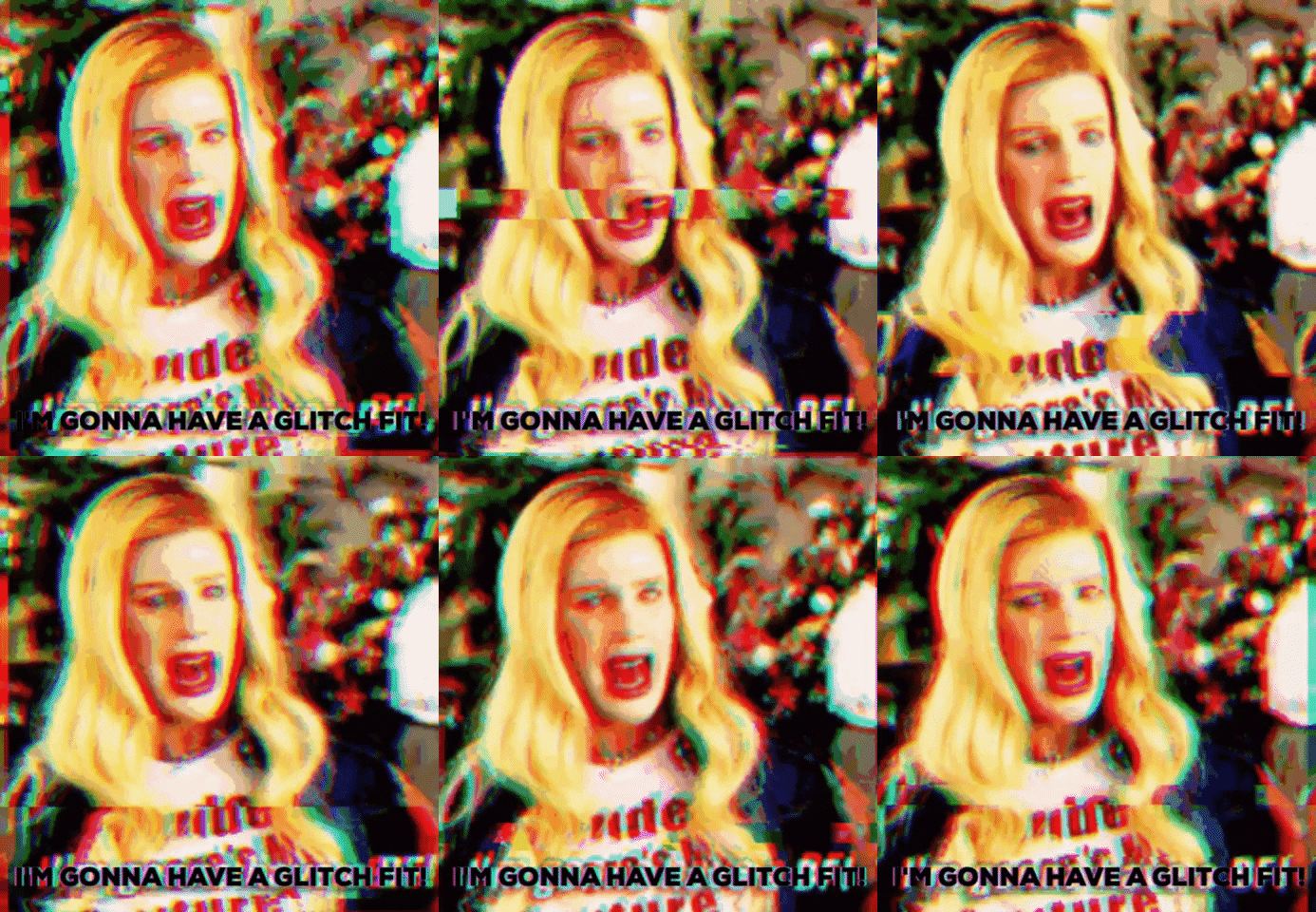
This whole idea that glitch is an ~ a e s t h e t I c ~ has really thrown me for a curve ball.
sidenote: was writing aesthetic in this way aesthetically pleasing? I see all the cool bcm kids doing it so it must be a ~ t r e n d ~
Back to the regularly scheduled program…
It wasn’t until discovering the VaporWave glitch aesthetic that I understood how much people enjoy and value making an image imperfect. By taking a still photo and adding movement, colors, and textures we add value to it.
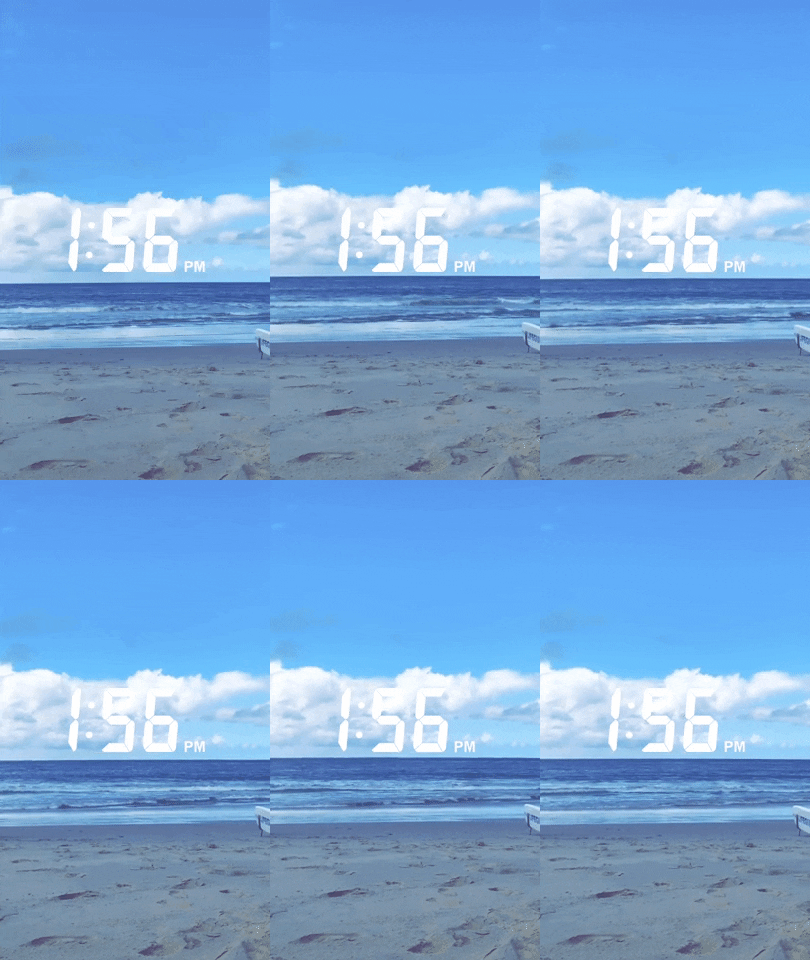
Here is a video I took at the beach one day, pretty basic with the snapchat time stamp on it. I would give it an 8/10 on content (I’m from small town Iowa, getting to go to the beach in March is pretty dope if you ask me) but for the aesthetics and creativity? 5/10. You could probably check the phone of every other girl studying abroad here and see an almost identical image.
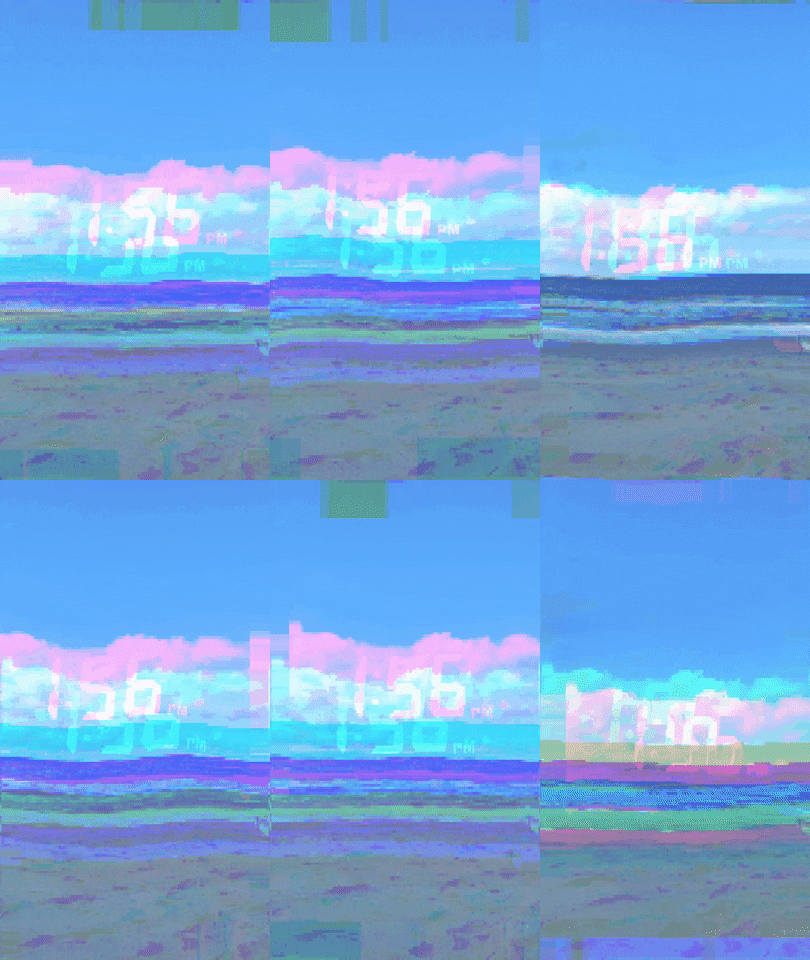
Now, I have used the tool PhotoMosh to add more dimensions, I added more colors and movement. The addition of the glitch makes it look perfectly imperfect. Since we know that it has been glitched it is pleasing to the eye and elicits more of an emotional response.
McLuhan’s idea that “the way we send and receive information is more important than the information itself” can be demonstrated with this glitching effect. This brings us back to the point that the medium is the message. The two images above are the same but their delivery changes the message and how we receive it.
This is my sixth semester of university and I have never taken a course on communications and media, I study applied behavioral science and pre-occupational therapy so this is all new territory for me. To say Ted lost me for a moment in lecture is being generous. This whole concept of “the medium is the message” took a hot minute to click, but once we started to ~dive deep~ it all began to make sense.
When I think about how the delivery of the message affects how we consume it I immediately go to social media.
I remember the release of Instagram when I was in grade school, it was all a platform for my friends and I to share our goofy pictures, it was so exclusive at the time and I never thought it would grow to be the empire it is today.
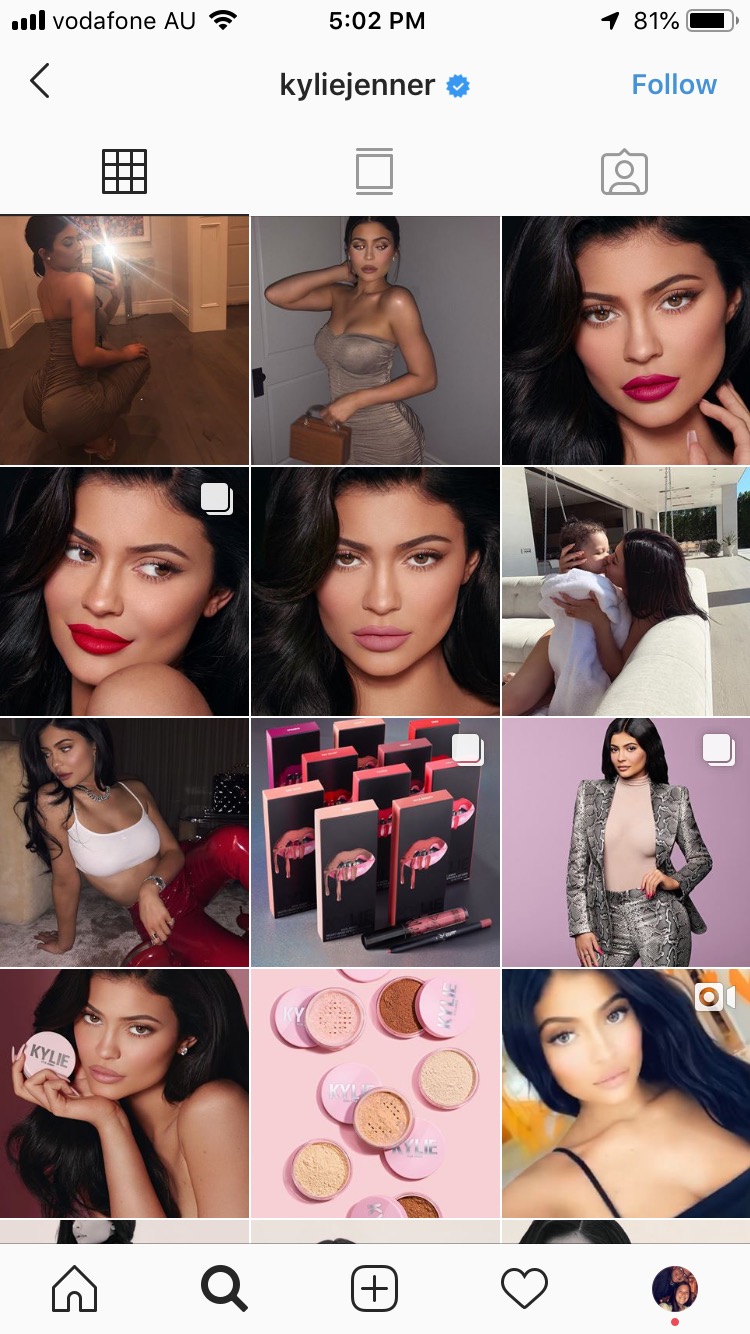
Now I think about how Instagram is actually a job for some people.
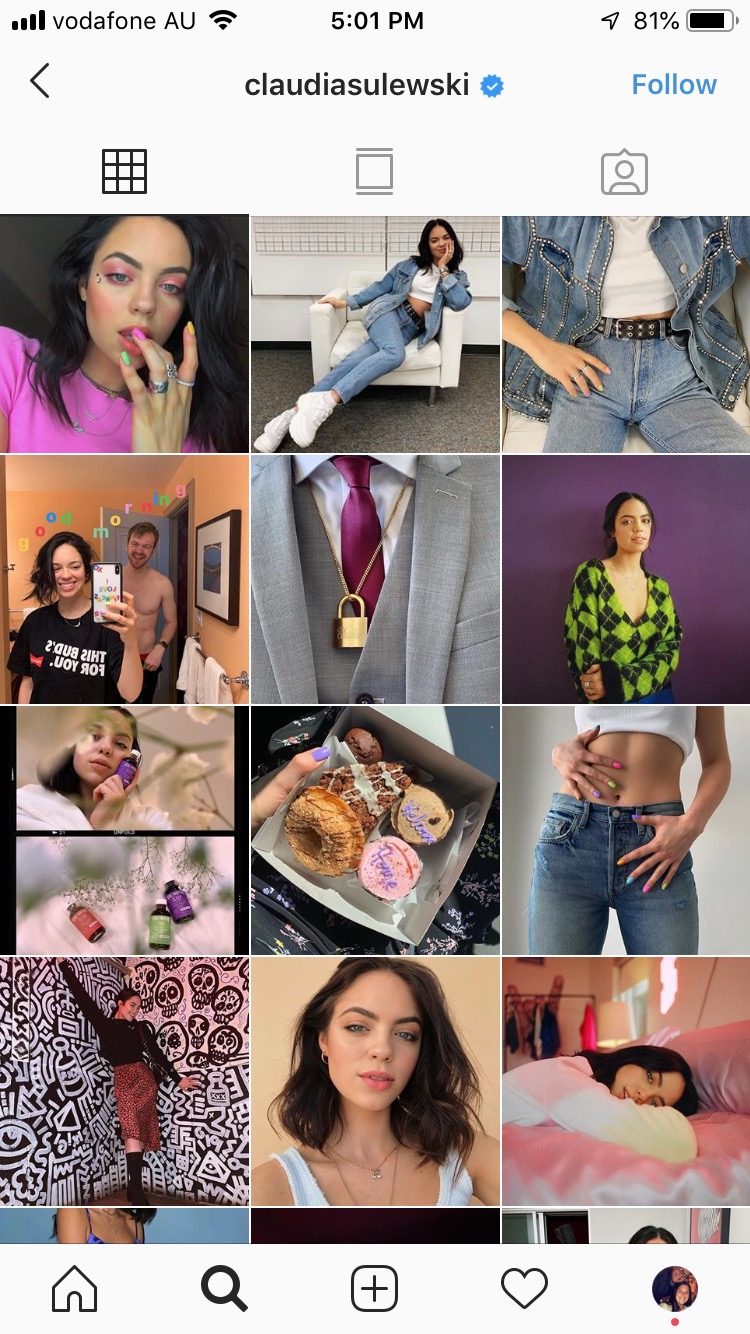
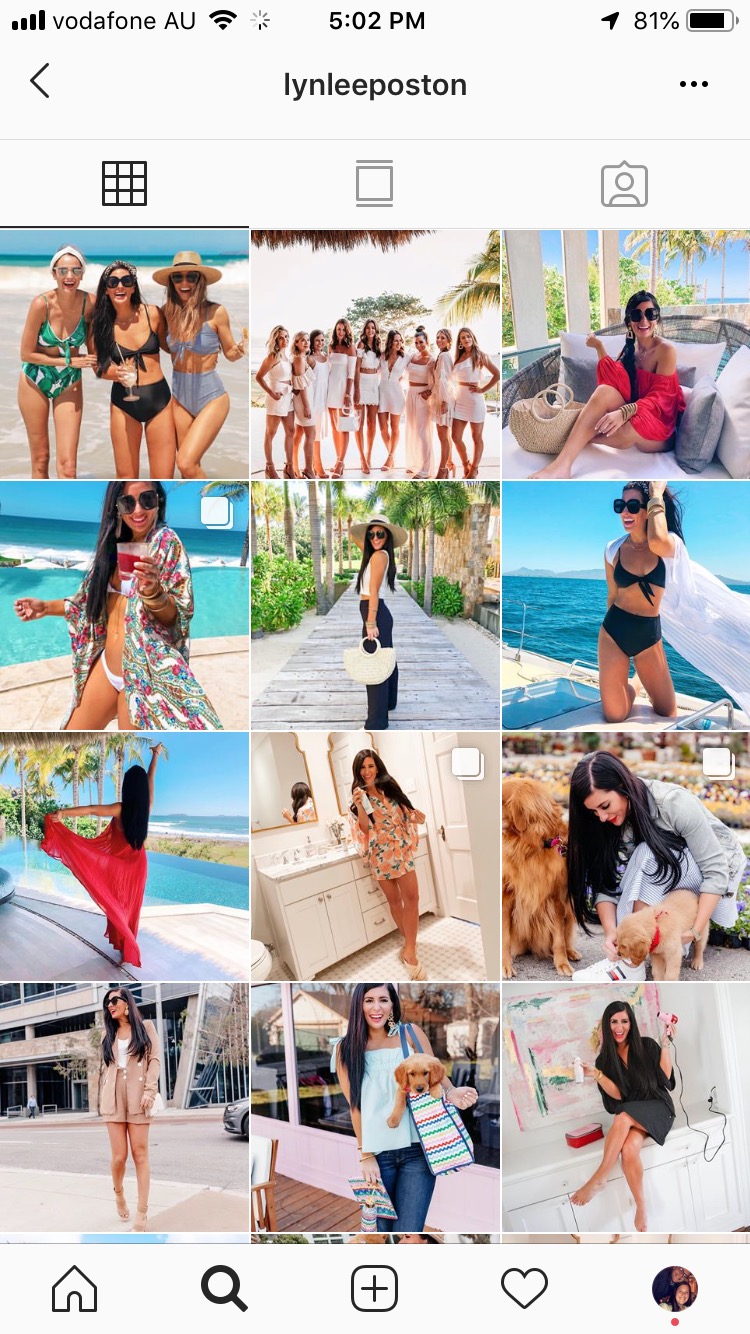
Each page I have shared above has a different aesthetic. Whether it is lifestyle, travel, or luxury. When you follow these pages you expect a certain type of content to be produced and the creators select content that will flow with the vibe of their page. Most, if not all, of the photos posted are posed and curated for their feed. They benefit off the notion that the medium is the message, they have a built in audience because of what is expected from them.
My goal is to create this with my DA project, a travel instagram. I have been studying how professional Instagramers structure their posts and create this flow that draws people in and keeps them subscribed to their content.






 Carson Whitford